
Why Outsource to Vietnam? Pros and Cons of Offshore Staffing for US Companies
The Short Answer
US companies outsource to Vietnam to hire skilled technical and creative staff faster, add capacity without adding fixed local headcount, and use the time difference to keep work moving around the clock. The main challenges are fewer shared working hours, English that varies by role, a competitive market for senior candidates and unfamiliar employment and data rules. With the right setup and a local partner that handles hiring, HR and compliance, each of these becomes something you plan for rather than a reason to stay away.
If you already know which roles you need, talk to Remote Resources about how they would work in Vietnam before you start writing job descriptions.
"Every offshore location has trade-offs. The companies that succeed in Vietnam are the ones that plan for them before the first hire starts."
After reading this, you'll know why US companies are choosing Vietnam, which challenges come with it, how a good staffing partner handles each one, and whether Vietnam suits the roles you need to fill.
Key Takeaways
- Vietnam's main advantages for US companies are a growing tech and creative talent pool, a fast-growing economy and a time zone that lets work continue while the US sleeps.
- The challenges are real but manageable: limited live overlap hours, English levels that vary by role, competition for senior talent, and local employment and data rules that differ from the US.
- Each challenge has a practical fix, most of which a staffing partner handles before your first hire starts.
- Vietnam is strongest for technical, creative and production roles. The Philippines leads for voice-heavy customer support, and India for very large-scale IT programs.
- You can start small with one offshore hire and scale into a dedicated team once the setup is proven.
Why US Companies Are Looking at Vietnam
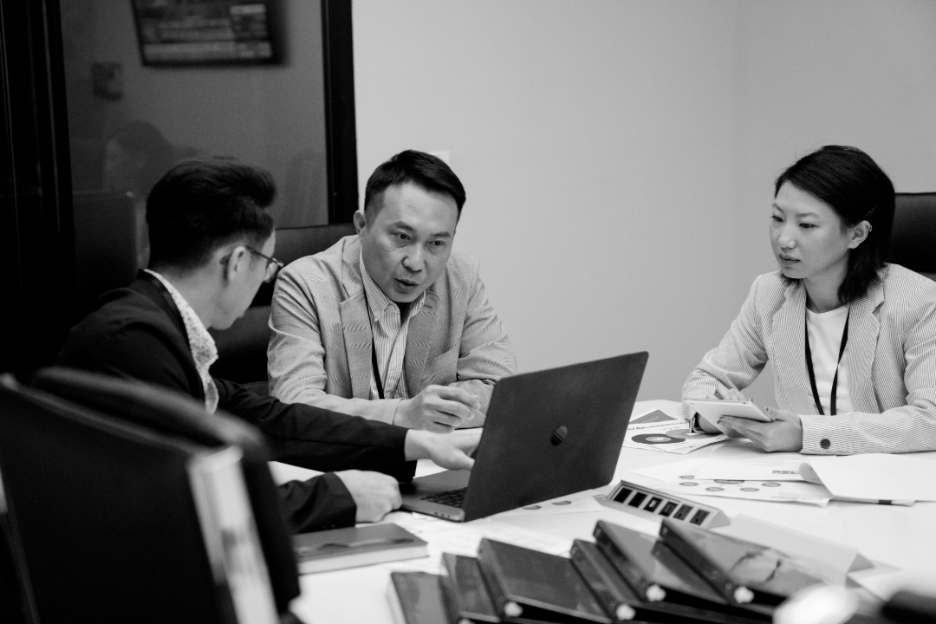
For many US companies, the starting point is a hiring problem at home. The US Bureau of Labor Statistics projects employment of software developers, QA analysts and testers to grow 15% from 2024 to 2034, with about 129,200 openings each year. Competition for those candidates keeps local hiring slow and expensive, and the same pressure exists in design, content and technical production roles.
Vietnam has moved from a manufacturing story to a talent story. Its economy grew by an estimated 8.02% in 2025, one of the strongest results in Asia, and American investment in the country has kept rising as US companies diversify their operations and supply chains beyond China. For companies that first came to Vietnam for manufacturing, building a creative or technical team in the same country is often a natural next step.
Cost still matters, but it is rarely the whole reason. Most US companies we speak with want offshore resources that are skilled, stable and easy to work with, not simply the lowest rate. We covered the wider drivers in our guide to the benefits of offshore staffing services. This article focuses on Vietnam specifically: what it does well and what to plan for.
The Pros: What Vietnam Offers US Companies

1. A time zone that keeps work moving overnight
Ho Chi Minh City is 11 hours ahead of US Eastern time during daylight saving and 12 hours ahead in winter. For the West Coast, the gap is 14 to 15 hours. Work handed off at the end of the US day can be tested, designed or processed overnight and be ready by the next morning. For QA, content production and design iterations, that turns the time difference into extra working capacity rather than a delay.
2. A growing tech and creative talent pool
Vietnam has a young workforce with strong technical skills. Industry estimates put the number of IT professionals at more than half a million, and the government has set a target of 80,000 ICT graduates a year by 2030. Beyond software, Vietnam has deep talent in 2D and 3D art, UI/UX, product and packaging design, animation and QA, built up over years of work for international gaming, toy and digital companies.
3. A strong, stable growth story
Vietnam has been one of the fastest-growing economies in Southeast Asia, and it reached upper-middle-income status in 2025. The government has made foreign investment and high-tech skills a clear policy priority. For a US company planning a team that will run for years, a stable and growing market lowers long-term risk.
4. Motivated staff who stay when they are supported
Vietnamese professionals tend to value stability, learning and a sense of belonging at work. When those needs are met, teams stay together for years, and that continuity is where offshore staffing pays off most. At Remote Resources, our people-first approach to HR, benefits and community has helped us keep a staff retention rate of nearly 100%, with several client teams running since 2018.
5. An established hub in Ho Chi Minh City
Ho Chi Minh City is Vietnam's main business center and home to its largest concentration of technical, creative and operational talent. It also has a mature base of offshore staffing services, office space and support providers. That means a US company can hire offshore staff in Vietnam without opening a local entity, setting up payroll or leasing an office.
Not sure whether your roles are a fit for Vietnam? Ask Remote Resources. We have hired for international companies in Ho Chi Minh City since 2012 and can tell you quickly what is realistic for your roles.
The Challenges, and How They Are Handled
No offshore location is free of trade-offs, and Vietnam is no exception. The good news is that none of these challenges is unusual, and all of them are well understood. Below is what each one looks like in practice and how Remote Resources sets things up to keep it under control.
1. Limited live overlap with US working hours
What it looks like: the time difference that creates overnight capacity also means fewer hours when both teams are online. Without a plan, a simple question asked at the wrong time can wait a full day for an answer.
How Remote Resources handles it: we help clients set a short, fixed daily overlap window from the start. Early morning on the US East Coast is evening in Ho Chi Minh City, so many teams use that slot for live check-ins and keep everything else in writing through clear handoff notes. Where a role needs more overlap, we can agree adjusted working hours with candidates during hiring, so expectations are clear from the first interview.
2. English levels vary by role and person
What it looks like: Vietnam sits in the "moderate proficiency" band of the EF English Proficiency Index, ahead of India and behind the Philippines. Written English is often stronger than spoken English, especially in technical roles. A developer may write clear documentation but feel less confident on a fast-paced video call.
How Remote Resources handles it: we screen candidates for English and communication as well as technical skill, and match the level to what the role actually needs. A client-facing project manager needs fluent spoken English. A 3D artist working from detailed written briefs may not. Clients interview shortlisted candidates themselves, so they can judge communication directly before making a decision. Additionally, we offer English classes to all our teams.
3. Competition for experienced talent in Ho Chi Minh City
What it looks like: demand for skilled tech and creative staff in Vietnam has grown faster than supply, especially at senior level. Good candidates often have several offers, and they leave employers who do not invest in them.
How Remote Resources handles it: we recruit from a database of more than 3,500 candidates, so searches do not start from zero. More importantly, we focus on keeping people once they are hired. Employees get local HR support, benefits, training and a real workplace community in our Ho Chi Minh City offices. That is how we keep retention close to 100% in a competitive market. Read more in our guide to employee retention in Vietnam.
4. Employment rules that differ from the US
What it looks like: employment in Vietnam is governed by Vietnam's 2019 Labor Code, not US at-will rules. Contracts, social insurance, notice periods and termination all work differently. A US company trying to manage this from abroad, or using informal contractor arrangements, can make costly mistakes without realizing it.
How Remote Resources handles it: we employ staff locally and handle contracts, payroll, social insurance, tax and compliance as part of our service. Clients do not need a Vietnamese entity. The relationship is set out in an overall Terms of Business agreement, with a separate Scope of Work for each role, so everyone knows who is responsible for what. Our cost structure is also transparent: the direct employment cost and our management fee are shown separately. Our guide to the real cost of hiring offshore staff in Vietnam explains which cost categories to check.
5. Data protection and IP
What it looks like: US clients, especially in software and product work, need clear IP assignment and confidentiality terms. Vietnam has also tightened its own rules: its Law on Personal Data Protection took effect on January 1, 2026, with specific requirements for transferring personal data across borders.
How Remote Resources handles it: we put confidentiality and IP terms in writing before work starts and provide managed workspace, hardware and IT support, so equipment is not left to personal setups. Clients set the access rules for their own systems, ideally role by role. Our article on the hidden risks of offshore staffing includes a checklist to use before granting system access.
6. Different communication styles
What it looks like: in many Vietnamese workplaces, staff are used to showing respect by not openly challenging a manager. Some offshore employees may hesitate to push back, ask questions or flag a problem unless they are clearly invited to. US managers who expect people to speak up can misread silence as agreement.
How Remote Resources handles it: part of our role is translating Western business expectations into how teams work in Vietnam, and the other way round. We help set communication norms at onboarding, encourage clients to ask for problems early and often, and give employees a local HR contact they can turn to. Over time, offshore staff become confident contributors rather than quiet order-takers.
For a wider look at how to prevent common problems, see our guide to the risks of offshore staffing and how to avoid them.
Vietnam vs the Philippines vs India for US Teams
Most US companies comparing offshore locations look at the same three countries. Each has real strengths. The best choice depends on the roles you need.
When Vietnam is the best fit: you need technical or creative skills rather than voice support, you want a team that builds product knowledge over years, and you value stability and quality over sheer volume. Vietnam is a less obvious choice if your main need is high-volume, phone-based customer support with fully fluent spoken English, where the Philippines is usually the stronger option.
Which Roles Suit Vietnam Best

US companies most often hire offshore staff in Vietnam for:
- Software and web development: front-end, back-end and full-stack developers
- QA and testing: manual and automated QA, overnight test cycles
- UI/UX and graphic design: product interfaces, marketing design and illustration
- 2D and 3D art and animation: gaming, digital content and motion
- Product, packaging and technical design: especially for toy and consumer product companies
- Project and studio management: team leads who coordinate the offshore team with the US side
- HR, admin and back-office support: roles that benefit from written, process-driven work
Ways to Start
You do not need to build a full team on day one. Most US companies start in one of three ways:
- Offshore staff augmentation: add one or a few people to a team you already run, to fill a specific skill gap. Our guide on how to know when you need offshore staff augmentation covers this in detail.
- Offshore staff leasing: a partner acts as the local employer for long-term staff you direct yourself. This often suits companies that have already found a strong candidate in Vietnam.
- A dedicated offshore team: build a full function, such as QA or design, as a unit that grows over time.
Many clients start with one or two hires, test the setup for a few months, then scale into a dedicated team once it works. Remote Resources supports all three through our offshore staffing services, so the structure can change as your needs change.
Next Step
Write down the roles you need, how long you expect to need them, and which of the challenges above matter most to you. Then ask every staffing partner you speak with to explain exactly how they would handle them.
When you are ready, get in touch with Remote Resources. We'll show you how your roles would work in Ho Chi Minh City, what you control, what we handle and how the costs are structured, so you can decide with the full picture. You can also browse more guides on the Remote Resources blog.
Frequently Asked Questions

Why outsource to Vietnam?
US companies outsource to Vietnam to access a growing pool of technical and creative talent, add capacity without adding fixed local headcount, and use the time difference to keep work moving overnight. Vietnam's fast-growing economy and strong government support for tech skills also make it a stable long-term base.
What are the pros and cons of offshore staffing?
The main pros are faster access to skilled people, more flexible capacity and extended working hours across time zones. The main challenges are less live overlap, communication differences, local employment rules and staff retention. With a clear setup and a local partner that handles hiring, HR and compliance, each challenge can be planned for and managed.
Is offshore staffing worth it for US companies?
For many US companies, yes, especially when local hiring is slow or expensive and the roles can be done remotely. It works best when the roles are clearly defined, someone in the US can direct the work, and the staffing partner provides real local support, not only recruitment.
How many hours ahead is Vietnam from the US?
Vietnam is 11 hours ahead of US Eastern time during daylight saving and 12 hours ahead in winter. It is 14 to 15 hours ahead of US Pacific time. Vietnam does not observe daylight saving time.
Is English a problem when hiring offshore staff in Vietnam?
Not if candidates are screened for the right level. Vietnam ranks in the "moderate proficiency" band for English, and written English is often stronger than spoken. A good staffing partner tests English and communication during screening and matches the level to what each role needs.
What is offshore staff leasing?
Offshore staff leasing means a staffing partner acts as the formal local employer for staff who work full time for your company. The partner handles contracts, payroll, benefits and compliance, while you direct the work. It is usually a long-term arrangement.
Do I need a company in Vietnam to hire offshore staff there?
No. A staffing partner such as Remote Resources can employ staff locally and handle payroll, HR, workspace and compliance for you, so you can hire offshore employees in Vietnam without setting up a local entity.
References & data sources
- US Bureau of Labor Statistics, Occupational Outlook Handbook: Software Developers, Quality Assurance Analysts, and Testers
- VnExpress: Vietnam reports 8.02% GDP growth in 2025
- VnExpress: Vietnam rises to 'moderate' level in English proficiency ranking (EF EPI 2025)
- BusinessWorld: Philippines ranks 28th in EF EPI 2025
- Vietnam Government Portal: STEM workforce targets for 2025–2035
- TopDev: Vietnam IT Market Report 2024–2025
- Tilleke & Gibbins: Vietnam's New Personal Data Protection Law
- VnEconomy: Stronger growth of US investment in Vietnam
- Remote Resources company information: founded 2012, 35,000+ candidate database, Ho Chi Minh City offices, client relationships since 2015 and 2017